Pet Travel: Packing For Your Dog

Thursday, November 13, 2008

Packing for your dog may seem a bit eccentric and, well, let's face it, a bit over the top, however it really can make the difference between a stressful and frustrating vacation or trip and a really enjoyable experience. Although some dogs are happy jumping in the car and heading out on the road with just their collar and a leash, most dogs are much more comfortable when they have some familiar items around them. In turn, the more comfortable and relaxed your dog is the better the trip will be for everyone. Taking a bit of time to pack your dog's travel gear is just part of being the great owner and companion to your pet you always wanted to be.

Deciding what gear your dog will need on the trip is largely a function of where you are going and what you are planning to do when you get there. Of course you will need the basic leash and collar or harness, but you may also want to consider some additional items such as a retractable leash or an extra long leash or lunge line to allow your pet to exercise and roam a bit while still staying under control. Remember you are going to be in an unfamiliar place and even the best behaved and trained dog may get the urge to explore, developing selective hearing regarding your increasingly frantic calls to return. A retractable leash for smaller to medium sized dogs is great option to allow space and freedom while still having control of the dog. For larger, heavier and stronger breeds a horse lunge line is an inexpensive option for a long leash plus they come in a wide assortment of colors and patterns.

If you have a short haired breed or a small dog and you are taking a winter holiday to enjoy the snowy weather, packing some dog sweaters and even dog booties may be important to protect your pet from the cold. This is especially important if your dog is used to being indoors most of the time or if you live in a year round warm climate. If you want to stay conservative there are lots of basic sweaters and heavier dog shirts and sweat suits available at pet store or online. For those that have more of a fashion flair, specialty dog boutiques and online stores offer endless outdoor gear options.

Read Full Article

Resources for


Bookmark and Share

Be Your Own Tour Guide

Tuesday, November 11, 2008

You are ready for your vacation and it is all planned. However do you have everything that you will need? If you are driving, you better have a map and directions to the destination that you are planning to go. Sometimes when you are going overseas you will need to have a visa and immunizations. You need to make sure that you have these before the day of your trip. You want to leave on your trip with confidence by being prepared for anything.

Do not let yourself over pack. Know what the best route to your destination is and plan well. If you think that you will have to dress up you should take a good outfit or two. Otherwise bring your casual clothes and make sure that you have all that you need.

Make sure that you know what the climate is for the place that you are going. Is it going to be hot? Will it get colder at night? You should probably bring an umbrella with you and lots of layers.

Do your packing around a main color. Neutral colors, blacks and tans or khakis are the best colors to choose to dress up or down with. You can add some color and use different accessories for different outfits and days. Remember darker colors and different prints are not going to show as much dirt.

You want to choose your clothes that you take carefully. Select many different layers and colors that will pack up easily. Make sure that the items can be washed and dried in a fast and easy manner. Do not take bulky sweaters and items if you can avoid it. You can always add some different belts, jewelry, and scarves to change the look of a great outfit.

You should never take more than five or six changes of clothes. Make them work together and be very durable and you will have more space and room for an article of clothing that you may find while you are on vacation.

Read Full

Resources for


Bookmark and Share

Betty Boop

Monday, November 10, 2008


Very cute pink and white Betty Boop License Plate. Great for decorating.


Round sign with classic Betty Boop in the center. Great for your kitchen or little girls room.


Bookmark and Share

Sara Bareilles - Love Song

Wednesday, November 5, 2008

Elvis Presley Stuck On You

Tuesday, November 4, 2008


Bookmark and Share

The Geology of the Grand Canyon

Sunday, November 2, 2008

How was it formed?

The truth is that no one knows for sure though there are some pretty good guesses. The chances are that a number of processes combined to create the views that you see in todays Grand Canyon. The most powerful force to have an impact on the Grand Canyon is erosion, primarily by water (and ice) and second by wind. Other forces that contributed to the Canyon's formation are the course of the Colorado River itself, vulcanism, continental drift and slight variations in the earths orbit which in turn causes variations in seasons and climate.

Water seems to have had the most impact basically because our planet has lots of it and it is always on the move. Many people cannot understand how water can have such a profound impact considering that the Canyon is basically located in a desert. This is one of the biggest reasons that water has such a big impact here. Because the soil in the Grand Canyon is baked by the sun it tends to become very hard and cannot absorb water when the rains to come. When it does rain the water tends to come down in torrents which only adds to the problem. The plants that grow in the Grand Canyon tend to have very shallow root systems so that they can grab as much water as possible on those rare occasions when it does rain. Unfortunately these root systems do nothing to deter erosion by holding the soil in place. Now you've got lots of water, no place for it to go, but down to the Colorado River, and nothing holding the soil and rock in place. The result is frequently a flash flood roaring down a side canyon that can move boulders the size of automobiles, buses and even small houses. If automobiles, buses and small houses are in the way then it will take them too. Luckily no one builds houses in the Grand Canyon so that's not a problem but there are a few autos, vans and buses sitting at the bottom of the Colorado. This mass that moves down a side canyon during a flash flood is more like a fast flowing concrete than water and it can be very dangerous. You should always be well informed of weather conditions when you are hiking through side canyons in the Grand Canyon.

After erosion by liquid water the next most powerful force is probably its solid form, ice. In the colder months, especially on the north rim, water seeps into cracks between the rocks. These cracks can be caused by seismic activity, or by the constant soaking and drying of the rocks. When the water freezes it expands and pushes the rocks apart and widens the cracks. Eventually rocks near the rim are pushed off the edge and fall into the side canyons. These rocks sometimes hit other rocks and are stopped but on occasion one fall by a large rock will cause a cascading effect and create a rock fall that will alter the landscape drastically in the side canyon. Debris from rock falls piles up at the bottom of the side canyons and is then carried down to the Colorado River the next time there is a flash flood. Rock falls frequently take out sections of trail in the Grand Canyon requiring the Park Service to close these trails until they can be repaired.

Once the ice had pushed the rocks off the edge and the water in the flash floods has carried them down to the river, then the Colorado itself takes over. The erosive action of the Colorado has been severely constrained by the building of the Glen Canyon Dam, which ended the annual spring floods, but there is still a lot of water flowing relatively quickly through a very narrow gorge. Before building the dam the Colorado River had spring floods that would exceed a flow rate of 100,000 CFS. All of that snow melting in the Colorado Rockies came pouring down through the Grand Canyon in May and June, every year, like clock-work. These spring floods were considerably larger than todays "trickle" of 8,000-10,000 CFS at low water and even the 20,000 CFS peak flow rates.

The Colorado's spring floods used to carry away all of the debris that was deposited in the main channel by the flash floods, but todays mediocre flow rates have a tough time doing the job. It still gets done to some extent, it just takes a lot longer. In the process of moving the rocks and sediment down the river to the Pacific Ocean the bed of the river is scoured by all of this fast moving debris which slowly eats away at the banks and bed of the river. This causes the river to widen and cut down deeper into the lower rock layers. Another cause for the slowing of the erosive force of the Colorado River is the fact that it is now trying to cut through harder granites and schists found at the bottom of the Canyon instead of the softer limestones, sandstones and shales near the top. This rock takes a lot longer to erode and a slower moving river means it takes even longer.

Read Full

Resources for


Bookmark and Share

Those were the days.

Tuesday, October 28, 2008


Polished chrome old fashioned ice cream scoop. 8" tall. Perfect addition to a Coca Cola lovers kitchen.


Very retro stainless steel toothpick dispenser. Authentic 50's diner design.

Coca Cola bottle design constructed from Die-Cast Chrome Plated metal. Meant to last for years.


Bookmark and Share

Sunday, October 26, 2008


This Destiny Highway Electric Art Picture depicts Clark Gable and Humphrey Bogart sit inside while James Dean watches Marilyn Monroe admire her reflection in the front door window.


The latest nostalgic artwork from Chris Consani - featuring Elvis, Marilyn, Bogie and James Dean hanging out at the local Diner. Numerous clues & hidden movie references hidden throughout this Blue Plate Special Electric Art Picture.


This Classic Interlude Electric Art Picture depicts Elvis, Marilyn, Bogie, and Dean together in the most appropriate setting of all ... at the Movies. James Dean tosses popcorn into Mariyln's brassiere. Another installment in the popular series by artist Chris Consani.

Route 66 Place

Bookmark and Share

Route 66 and Northern Arizona

Tuesday, October 21, 2008

Introduction:
The History of Modern Northern Arizona and Route 66 are inseparable. Route 66 is but one of several modern and historic transportation route that cross Northern Arizona. Historically, explorers like Beale traveled the 35th parallel route, and in more modern times Route 66 shared the route with Southern Union Gas, and the Burlington Northern Santa Fe Railroad. The communities of the northland have been affected by these influences but much of their growth and prosperity has been shaped by their relationship with Route 66 and the various forms it has taken across time.

Early Roads:

Route 66 was created out of earlier, locally developed roads. In this regard then, Route 66 has roots in an earlier period of transportation. Initially, there was not a tremendous need for highways in the West after the initial wave of railroad building. The railroads performed an effective job of transporting goods and passengers across Northern Arizona. The communities served by the railroad (initially the Atlantic and Pacific, later the Santa Fe) were all small, and easily navigated on foot, or by horse. It really was not until the advent of the bicycle and later, the automobile, that there was a nationwide call for serviceable streets and highways. Road building also sprang from the Progressive Era as a way of linking the rapidly changing urban landscape with the isolated rural regions of the U.S.

As such, there were local roads which followed earlier established trails connecting one town to the next across Northern Arizona. These roads were the first roads established as official, receiving whatever care the State Engineer's Office could spare. Road building and maintenance was modeled after the railroad example with dedicated crews and equipment for specific sections of highways. For the most part, these crews did their best to keep roads smooth by grading them with drags, and providing minimal filling and cutting to reduce only the worst grades and dips.

Establishment and Building of Route 66:

Early federal highway building was based upon a number of programs which led to the creation of true inter-state highways. First, the government threw its weight behind establishing and improving so-called Postal roads, that is, roads upon which mail was to be carried. It also provided funding for states to establish roads they felt were important. These had mixed results. One initial problem was that because local highway engineers were not thinking in terms of a national system, and thus many strange little roads which benefited few were created. On the positive side, rural and urban America became linked through the Post roads initiative, decreasing the distance between the two populations. The big change came when highway builders did consider the results of linking local roads to create national highways, rather than simply building roads to connect local towns. The funds for these programs were small given the task at hand. Early roads had to be as short as possible, yet avoid fills or cuts, and bridges and tunnels as much as possible. These constraints helped to make the roads one with the environment, rather than today's highways which tend to dominate the environments through which they pass. Given these issues, Route 66 was laid out as a Northeast-Southwest highway which primarily overlaid existing roads. In Northern Arizona then, Route 66 overlay the Holbrook-Winslow highway, the Winslow-Flagstaff highway, the Flagstaff-Williams highway, and so on. There were some notable stories therein. The road from Williams to Ash Fork was a constant source of problems for road builders because of the combination of grade, water, soil and weather. Likewise the realignment of the railroad in Western Arizona caused 66 to change course a number of times.

Road building in the Northland presented a fairly overwhelming challenge given the variety of geology and terrain through which Route 66 passed. The road could not be called a "12 month" road until paving was completed in 1937.

Evolution of Route 66:

Route 66 evolved over the years in such a way that we can clearly see 4 distinct versions of the road. The first is the road as it was established in 1926. This road was simply the official designation of 66 over the existing roads of the day. With only tiny exceptions, this road was unpaved. Almost immediately following, we see the beginning of the "improvement" phase where the road was widened to federal and state specifications, and some changes were made to alter the course of 66 away from steep grades, or deep canyons. This period was followed by the paving of 66. Inclusive with paving came another round of realignment. Locally we can see examples of such realignment at Padre Canyon, Parks, the Ash Fork grade, and in other select spots across Northern Arizona. Paving was completed by late 1937. Another array of local realignment occurred after World War II. where the concrete road appeared. local examples include the Walnut Canyon-Flagstaff alignment in 1947, and the Yucca cut-off west of Kingman which bypassed Oatman in 1952. Parks and Bellmont display all three versions. Finally is the establishment of I-40. In much of Eastern Arizona, I-40 overlays 66 almost completely with a few exceptions between Holbrook and Winslow and between Winslow and Flagstaff. On the West side the new alignment I-40 cut, laid the foundation for preserving one of the longest stretches of 66, from just West of Ash Fork, to the Colorado River.

Effects of Route 66 on Northland Cities and Towns:

Generally, Northland towns were following the lead set by other Rocky Mountain communities across the West where tourists became a viable part of each localities economy, and each town worked on ways to best exploit that resource. To that end, we can see an Eastward growth for each town to grab tourists and motorists as they hit town with one sort of business or opportunity. The main streets of Northern Arizona's towns were lined with tourist/traveller-oriented enterprises; restaurants, drive-ins, curio shops, gas stations, and motels all formed the commercial sections of the town's main drag. The most extreme example of this community building along Route 66 might be Gallup, New Mexico, which has a main street nearly 14 miles long, yet most of the town is less than several blocks deep.
Route 66 traveling near the railroad tracks of the Santa Fe, often helped reinforce the separations established by the railroad so that the areas of town on the north side of the highway were often quite different from those on the south side.

Current Route 66:

The last piece of active Route 66 at Williams, Arizona was decommissioned in 1986. This event heralded a period of reflection regarding the role of Route 66 on local and national history. Across the states through which Route 66 ran, historical associations sprang up to grapple with the issues surrounding preservation of something as unwieldy as a highway, and its attendant architecture. There was a rush of book publishing. Some works were combinations of "coffee table" and popular culture works like Michael Wallis' Route 66: The Mother Road, some were personal as in the case of Tom Teague's Searching for 66, or Quinta Scott's Route 66: The Highway and Its People. Many more simply attempted to capture the "scrap-book" flavor of travel of the earlier part of this century. Many of these publications hinted at the importance of Route 66 (and the potential future for Route 66 studies), but all for the most part failed to identify just what it is about Route 66 that make such study worthwhile, and there was little agreement about what time period or version of the road's past was to be the appropriate subject of such study or preservation.

Read Full

Resources for

Route 66 Place

Why is this road so important to America?

Monday, October 20, 2008

The Beginning

Although entrepreneurs Cyrus Avery of Tulsa, Oklahoma, and John Woodruff of Springfield, Missouri deserve most of the credit for promoting the idea of an interregional link between Chicago and Los Angeles, their lobbying efforts were not realized until their dreams merged with the national program of highway and road development.

While legislation for public highways first appeared in 1916, with revisions in 1921, it was not until Congress enacted an even more comprehensive version of the act in 1925 that the government executed its plan for national highway construction.

Officially, the numerical designation 66 was assigned to the Chicago-to-Los Angeles route in the summer of 1926. With that designation came its acknowledgment as one of the nation's principal east-west arteries.

From the outset, public road planners intended U.S. 66 to connect the main streets of rural and urban communities along its course for the most practical of reasons: most small towns had no prior access to a major national thoroughfare.

The Formative Years

Route 66 was a highway spawned by the demands of a rapidly changing America. Contrasted with the Lincoln, the Dixie, and other highways of its day, route 66 did not follow a traditionally linear course. Its diagonal course linked hundreds of predominantly rural communities in Illinois, Missouri, and Kansas to Chicago; thus enabling farmers to transport grain and produce for redistribution. The diagonal configuration of Route 66 was particularly significant to the trucking industry, which by 1930 had come to rival the railroad for preeminence in the American shipping industry. The abbreviated route between Chicago and the Pacific coast traversed essentially flat prairie lands and enjoyed a more temperate climate than northern highways, which made it especially appealing to truckers.

The Depression Years and the War

I n his famous social commentary, The Grapes of Wrath, John Steinbeck proclaimed U. S. Highway 66 the "Mother Road." Steinbeck's classic 1939 novel, combined with the 1940 film recreation of the epic odyssey, served to immortalize Route 66 in the American consciousness. An estimated 210,000 people migrated to California to escape the despair of the Dust Bowl. Certainly in the minds of those who endured that particularly painful experience, and in the view of generations of children to whom they recounted their story, Route 66 symbolized the "road to opportunity."

From 1933 to 1938 thousands of unemployed male youths from virtually every state were put to work as laborers on road gangs to pave the final stretches of the road. As a result of this monumental effort, the Chicago-to-Los Angeles highway was reported as "continuously paved" in 1938.

Completion of this all-weather capability on the eve of World War II was particularly significant to the nation's war effort. The experience of a young Army captain, Dwight D. Eisenhower, who found his command bogged down in spring mud near Ft. Riley, Kansas, while on a coast-to-coast maneuver, left an indelible impression. The War Department needed improved highways for rapid mobilization during wartime and to promote national defense during peacetime. At the outset of American involvement in World War II, the War Department singled out the West as ideal for military training bases in part because of its geographic isolation and especially because it offered consistently dry weather for air and field maneuvers.

Route 66 helped to facilitate the single greatest wartime manpower mobilization in the history of the nation. Between 1941 and 1945 the government invested approximately $70 billion in capital projects throughout California, a large portion of which were in the Los Angeles-San Diego area. This enormous capital outlay served to underwrite entirely new industries that created thousands of civilian jobs.

Read Full

Resources for

Route 66 Place

Bookmark and Share

Route 66 & the National Old Trails Highway

Wednesday, October 15, 2008


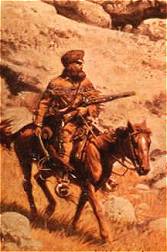
The story of Route 66 starts over a century earlier when a young country began to grow westward. The vast unexplored lands beyond the Mississippi River fired the imagination of the American people. The seemingly limitless resources beckoned to a nation on the move. The mountain men themselves, in an effort to leave the settled east behind, inadvertently opened up the unspoiled west to the westward expansion of a nation by their explorations. There were no established trails but the ones the mountain men blazed themselves as they followed the beaver along the traces left by the Native Americans.

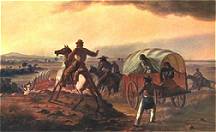
These old trails, blazed by the mountain men, were generally all that existed for the immigrant wagon trains that followed shortly after. The trails were general courses, where wagons would spread out over a wide area, following a single track only where landforms forced them to.

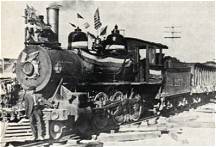
With the gold rush of 1849, thousands of people sought routes to California, publicizing the area in an unprecedented way. The west was being opened and from trails such as the Santa Fe Trail, Jedediah Smith’s route across the Mojave Desert to San Bernardino and Beale’s Wagon Road across New Mexico and Arizona a transportation corridor began to emerge. The railroads would follow this corridor a few years later further establishing routes west that would someday become a part of Route 66. The railroad also provided new routes for wagon travel, and wagons increasingly followed alongside the tracks.

Because train engines were limited in the terrain they could cross, railroad routes were painstakingly chosen. The railroad had to follow the contours of the land, avoiding steep grades. The railroad also had to connect sources of water, as the steam engines of those days required substantial water. As a result, the route was far easier and more gradual than earlier wagon roads had been. Wagon travelers (and, later, motorists) following alongside the rail tracks could find water and get help in emergencies. Many of the sidings and water stops became communities that would survive into the highway era.


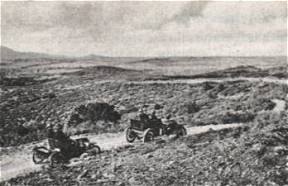
The advent of the automobile changed the face of America forever. The arrival of Ford’s Model T in 1908 had a dramatic effect on the American populace, as automobiles became accessible to the common man. The automobile provided a new economic base never seen before. Now Americans began to travel. No longer were they confined to the short distances that a horse could travel in a day. Journeys that would take many days on horseback or wagon now took a mere few hours.


Read Full


Resources for


Route 66 Place


Bookmark and Share